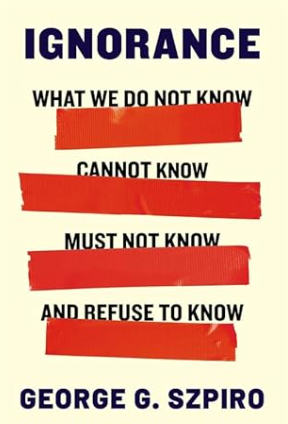
가제: 무지: 우리가 알지 못하는 것, 알 수 없는 것, 알아서는 안 되는 것, 그리고 알기를 거부하는 것
원제: IGNORANCE
: WHAT WE DO NOT KNOW, CANNOT KNOW, MUST NOT KNOW, AND REFUSE TO KNOW
저자: George G. Szpiro
출판사: Columbia University Press
344쪽 / 인문 / 2026.3 출간예정
모르는 것은 결코 어리석은 것이 아니다 — 무지(無知)는 지식의 또 다른 얼굴이다.
외계인 존재에 대한 증거가 없다는 것은, 그들이 존재하지 않는다는 뜻일까? 증명되지 않은 수학적 가설이 왜 깊은 영향을 미칠까? 인간은 신성(divinity)의 본질을 이해할 수 있을까? 환자에게 위약을 투여하는 것은 윤리적으로 옳은가? 왜 사람들은 ‘지구 평면설’처럼 명백히 거짓인 믿음을 고집할까? 우리는 자신이 언제 죽을지를 알고 싶어해야 할까?
이 책은 저널리스트가 된 수학자 ‘조지 G. 슈피로’가 이러한 질문들을 비롯한 다양한 문제를 통해, ‘무지로부터 무엇을 배울 수 있는가’를 유쾌하고 지적인 여정으로 풀어낸다. 과학, 수학, 법학, 경제, 정치, 종교, 심리학, 철학 등 다양한 영역을 넘나들며, 일상적인 질문부터 심오한 사유까지 아우른다.
저자는 “무지”가 여러 형태로 존재한다고 말한다. 어떤 질문은 아직 잠시 미해결 상태에 있을 뿐이며, 어떤 것들은 본질적으로 답이 불가능한 문제이다. 때로는 권위자들이 의도적으로 답을 감추기도 하고, 또는 우리의 편견과 선입견이 스스로를 가로막기도 한다. 심지어 우리가 ‘일부러 모른 척’하기도 하는데, 놀랍게도 그것이 합리적일 때도 있다.
저자는 궁극적으로 ‘무지’는 부정적인 것만은 아니라고 말한다. 우리가 그것을 인정할 때, 무지는 지식과 지혜를 향한 탐구의 원동력이 될 수 있다. 이 책은 복잡한 주제를 누구나 이해할 수 있게 풀어내며, “모름”이야말로 “앎”의 본질을 비추는 가장 명료한 거울임을 보여준다.
[목차]
Preface
Introduction
I DO NOT KNOW
1 Do Aliens Visit Us? Flying Saucers and Other UFOs
2 Knowledge Under Seal: Les Plis Cachetés
3 A Mathematical Riddle: The Riemann Hypothesis
4 Restricted Access: Top Secret vs. Freedom of Information
5 Ignoramus et Ignorabimus: A Controversy in Germany
6 Will the Universe Expand Forever? Big Crunch, Big Bounce, Big Rip, or Big Chill
7 Ignorantia Legis Non Excusat: Presumed to Know
8 What Is Nothing? Horror vacui
9 Is Justified True Belief Knowledge? Gettier’s Problem
10 Hard but Easy: P vs. NP
11 Ignoring One’s Own Assessment: Ellsberg’s Paradox
12 It’s There but Can’t Be Seen: Dark Matter
13 Unskilled and Unaware of It: The Dunning-Kruger Effect
14 The Hard Problem and the Easy Problem: Understanding Consciousness
15 Uncharted Depths: Aqua Incognita
II CANNOT KNOW
16 On Learned Ignorance: Cardinal Nicolas de Cusa
17 Where and How Fast? The Uncertainty Principle
18 Half Zeros, Half Ones: Random Numbers
19 Satisfice, Don’t Optimize: Bounded Rationality
20 Don’t Even Ask: Meno’s Paradox
21 Engaging in Risky Behavior: Moral Hazard
22 Nonlinearities Have Consequences: Chaos Theory
23 The Sixth Sense in a Post-Truth World: Alternative Facts and Fake News
24 How Long Is the Coast of Britain? Fractal Dimensions
25 Is the Solar System Stable? KAM Theory
26 Entering Infinite Loops: The Turing Halting Problem
27 True but Not Provable: Gödel’s Incompleteness Theorems
28 Storing Music, Photos, Video, and Text: Algorithmic Complexity
29 Too Far Away: The Light Cone
30 Is Your Red My Blue? Qualia
III MUST NOT KNOW
31 Preventing Last Rites: Professor Bernhardi
32 The Veil of Ignorance: John Rawls’s Theory of Justice
33 Show and (Don’t) Tell: Zero Knowledge Proofs
34 Limited Liability: The Corporate Veil
35 Move to Strike: Unringing the Bell
36 Hot Stock Tips: Insider Trading
37 Carnal Knowledge: Adam and Eve
38 Ignore Irrelevant Alternatives: The Theory of Games
39 Blind and Double Blind: The Placebo Effect
40 Polls Are Like Perfume: The Bandwagon Effect
41 Don’t Talk About Money: Compensation Secrecy
42 Cursed Be He: Spinoza’s Theses
43 Apply for a Patent or Keep a Secret? Intellectual Property
44 Don’t Throw Good Money After Bad: The Sunk Cost Fallacy
45 Kabbalah: Only Men Over Forty
IV REFUSE TO KNOW
46 Murder, Suicide, or the Gods’ Wrath? The Square Root of 2
47 “Eppur si muove!” The Trial of Galileo
48 Diamonds Are a Girl’s Best Friend: A Mineral Consisting of Pure Carbon
49 The Silent Epidemic of Misunderstandings: Pluralistic Ignorance
50 “Non, je ne regrette rien”: Anticipated Regret
51 Ill-Informed but Harmless? Flat-Earthers
52 Don’t Even Talk About It: Critical Race Theory
53 Oldies Prefer Ignorance: Twenty-Somethings vs. Over-Eighties
54 Protecting the Second Amendment: The Dickey and Tiahart Amendments
55 Ignoring High-Risk Events: Disaster Insurance
56 Legislating Mathematical Truth: π = 3.2?
57 To Test or Not to Test? Prostate-Specific Antigens
58 Beware: Violence Ahead! Trigger Warning
59 Don’t Tell Me You Did It: Plausible Deniability
60 Experts, Shmexperts: Denial of Expertise, Dismissal of Elites
Epilogue
Notes
Index
[저자] 조지 G. 슈피로
저널리스트, 수학자. 스위스 국립공과대학에서 수학 및 물리학 석사학위를, 예루살렘 헤브라이 대학에서 수리경제학 박사학위를 받았다. 또한 스탠퍼드 대학교에서 MBA, 히브리 대학교에서 수리경제학 박사를 취득한 그는 워튼 스쿨, 히브리 대학교, 취리히 대학교에서 강의활동을 전개하면서 30여 편의 논문도 발표하였다. 그러다 1987년 기자로 변신하여, 20년간 스위스 일간지「노이에 취르허 차이퉁」의 이스라엘 특파원으로 일했다. 주요 저서로는 『Risk, Choice, and Uncertainty: Three Centuries of Economic Decision-Making』 『Perplexing Paradoxes: Unraveling Enigmas in the World Around Us』 등이 있다.
[리뷰]
Ignorance has become a hip topic in academia and beyond. George Szpiro’s new book masterfully weaves together different streams of this trend by delving into the flipside of knowledge from everyday perspectives, that is, the normalcy of nonknowledge, intentionally or not, in basically all areas of life. By so doing, Szpiro detects sixty “normal” instances of ignorance, no less. If you truly want to know about not knowing, then this is the book to read.
- Matthias Gross, author of Ignorance and Surprise
Szpiro returns with a witty, thought-provoking exploration of life, history, and the meaning of our existence. Fun to read yet deeply educational, this lively journey through ideas reminds us why books still matter.
- William Eimicke, Columbia University School of International and Public Affairs
Szpiro has opened a curiosity cabinet of a captivating spectrum of queries and answers about what is knowable, somewhat knowable, and what is not. Ignorance is crafted superbly as a fun book, with thoroughly engaging origin stories and vignettes of discovery that investigate belief, doubt, uncertainty, and suspicion ― illuminating from beginning to end.
- Joseph Mazur, author of The Clock Mirage: Our Myth of Measured Time |